
Maintenance
Why Does Shower Caulk Keep Failing?
By Ivan ·
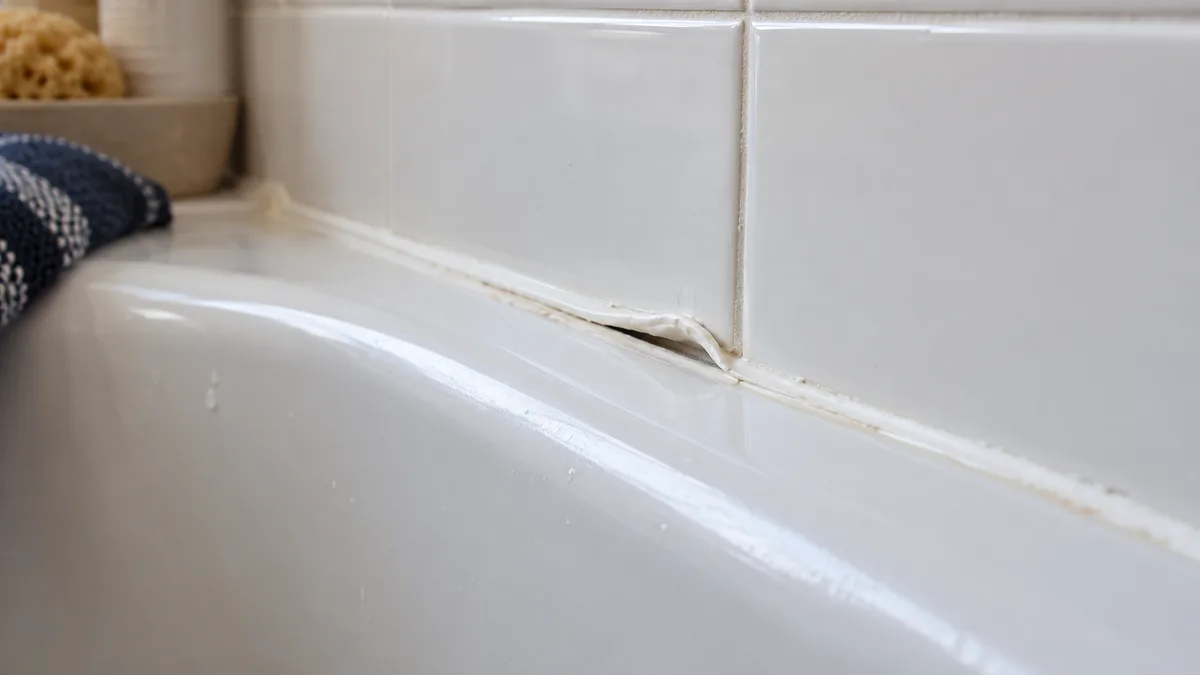
A new bead that separates after a short time needs more than a different color or a heavier application. Look at where it failed: along one edge, through its middle or where the joint meets an unstable tile. That observation helps distinguish an adhesion problem from movement or an unsuitable joint detail.
Write down the product used, when it was applied and when the shower was used again. Keep a photo from before removal. Once the old bead is gone, evidence about how it separated can be lost.
Match the symptom to the next question
| Failure pattern | What to investigate |
|---|---|
| Bead peels cleanly from one side | Old silicone film, soap residue, moisture or incompatible surface |
| Split through the bead or repeated open gap | Movement, joint geometry or unsuitable material |
| Bead remains tacky or was disturbed early | Product conditions, age and cure instructions |
| Dark surface spots without separation | Cleaning, retained moisture and ventilation |
| Discoloration with soft wall or water outside the shower | Moisture source and affected materials, not only the bead |
Preparation is more than pulling out the visible strip
DAP specifies removing old caulk, cleaning away contaminants and ensuring clean, dry surfaces for its Silicone Max product. A remaining film can be difficult to see. A new bead may adhere to that residue instead of the intended tile or tub surface.
Use removal and cleaning methods compatible with the enclosure and the new product. Avoid aggressive cutting into a shower corner where waterproofing may be near the surface. Let the bonding surfaces dry, and investigate continued dampness rather than sealing it out of sight.
Check joint design and movement
A bead that stretches across a moving joint needs suitable dimensions and adhesion. The product instructions may require backing material or a primer for particular surfaces. Filling an oversized cavity indiscriminately can create a joint that behaves differently from the intended detail.
A tub or base that visibly shifts, or tile that moves beside the bead, needs assessment. Sealant can accommodate specified movement; it cannot secure an unstable fixture or repair a deteriorated substrate.
If the corner contains hard grout instead, compare grout and caulk locations in a bathroom.
Water-ready and fully cured are different claims
Some products advertise an early water-exposure time under stated conditions; full cure may take longer. Read the exact product instructions for bead size, temperature and humidity. A universal rule such as “all silicone is ready in 24 hours” can give the wrong answer for the product and conditions you actually have.
Plan the repair around that waiting period. Touch-dry sealant is not sufficient evidence that a shower can be used. Keep the packaging or record the product name so the next person can check its requirements.
When to investigate beyond the caulk
Surface discoloration alone does not prove hidden mold or a failed shower. Persistent dampness, swelling outside the enclosure, a musty odor or staining below it changes the assessment. A fresh bead should follow correction of the water source, not postpone it.
If those signs are present, read signs water may be behind bathroom tile.
For the larger scope decision, see our bathroom repair or remodel guide.
Once the joint and underlying surfaces are suitable, our shower caulk and tile repair service can assess removal and replacement of the failed sealant.
Common questions
Can I apply new silicone over old silicone?
Do not assume it will bond adequately. Remove failed material and residue and follow the selected sealant manufacturer preparation instructions.
Why does the same corner split again?
Possible factors include continuing movement, the wrong material or inadequate joint dimensions. Check the adjacent tile and fixture stability before repeating the same repair.
Does black staining mean water is behind the tile?
No. Surface growth or discoloration does not establish concealed damage. Recurring dampness, soft materials, outside staining or a leak requires further assessment.
When can I use the shower after recaulking?
Use the water-exposure time specified for the exact product and application conditions. Skin formation, advertised early water readiness and full cure are different milestones.