
Home Repairs
Cracked or Loose Shower Tile: What Caused It?
By Ivan ·
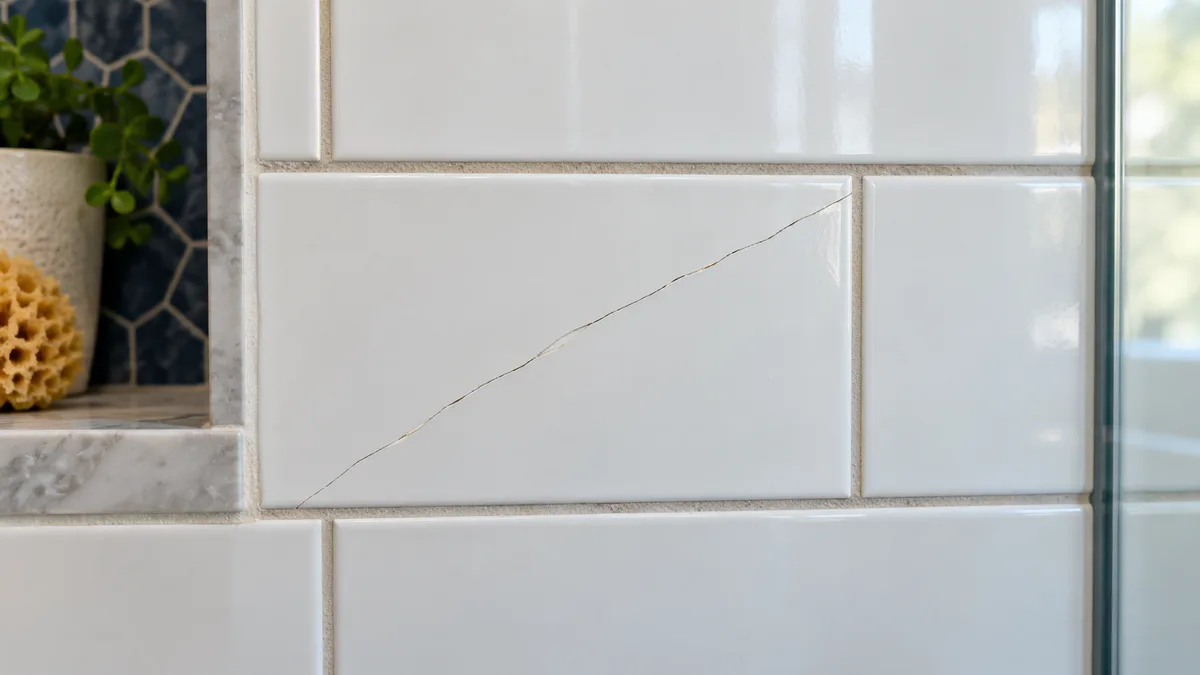
Before buying a replacement tile, determine what failed. A chipped face after an object struck it is different from a line running through several tiles. A tile that shifts is different from one that merely sounds hollow when tapped. Each calls for a different investigation.
Photograph the entire wall or floor, not just the broken tile. The relationship to corners, fixtures, nearby joints and previous repairs can be more useful than the crack width alone. Do not pry a loose tile from a shower wall just to look behind it; that can disturb the waterproofing or release adjacent pieces.
What the damage pattern can tell you
| Observation | Possible cause | Useful next check |
|---|---|---|
| Single chip or star-shaped face damage | Impact or local damage | Was anything dropped or struck there? |
| Line continuing through several tiles or joints | Movement transmitted from the assembly | Does it recur, and where does the line begin? |
| Tile shifts or an edge lifts | Loss of bond or backing failure | Are neighboring tiles affected? |
| Crack at an inside corner | Joint unable to accommodate movement | Is the crack in grout, sealant or the tile face? |
| Damage with soft wall or staining outside the shower | Possible moisture-related deterioration | Inspect the water source and affected cavity |
A hollow sound is not a complete diagnosis
Tapping can help an installer compare areas, but sound varies with the backing and installation. A hollow-sounding section alone does not establish how much mortar is bonded, whether water is escaping or whether the tile is about to fall. Avoid turning a sound test into a reason to replace the whole bathroom.
Actual movement, widening joints, loose neighboring tiles and visible moisture damage carry different information. An inspection may need controlled access to distinguish a local bond issue from a failing backing assembly. The person opening it should plan how the wet-area system will be repaired afterward.
Why a replacement can crack again
Replacing the finish leaves any continuing movement underneath in place. Tile-industry movement-joint guidance addresses joints that allow assemblies to move without concentrating stress in the rigid surface. Missing or blocked movement joints are one possible factor; they are not the only explanation for every crack.
For tiled floors, the supporting structure and underlayment also matter. Schluter-hosted technical material explains how bending of wood subfloor assemblies can crack tile and grout. That floor mechanism should not be assumed to explain every shower-wall defect.
What a sound spot-repair plan includes
If a continuous waterproofing repair cannot be made through the available opening, the scope may need to grow. A clean-looking replacement is not enough if the assembly behind it remains compromised.
For the wider scope decision, use our bathroom repair or remodel guide.
If the damage is suitable for local repair, see our Long Island tile repair service for replacement and joint repair options.
- Establish whether the defect is isolated and the adjacent assembly is stable.
- Confirm a replacement tile of suitable size, thickness and finish is available.
- Plan removal to protect nearby tile and the water-management system.
- Repair backing or waterproofing where required using compatible system details.
- Set and grout the replacement, restore relevant flexible joints and follow product cure instructions.
Common questions
Can I glue a loose shower tile back in place?
Only after the bond failure and backing condition are understood. Injecting or adding adhesive does not establish that the waterproofing is intact or correct a deteriorated substrate.
Does a cracked shower tile always leak?
No. A functioning waterproofing system beneath the tile may still contain water. The crack should be assessed because its cause and any damage behind it cannot be determined from the face alone.
Should I stop using a shower with loose wall tiles?
Avoid the affected shower when tiles could detach, water is escaping or the backing seems unstable. Arrange an assessment before applying another surface patch.
What if no matching tile is available?
A contrasting replacement or a larger coordinated section may be an option. Check waterproofing repairability first, then choose a finish approach you will accept.