
Home Repairs
Signs Water May Have Reached Behind Bathroom Tile
By Ivan ·
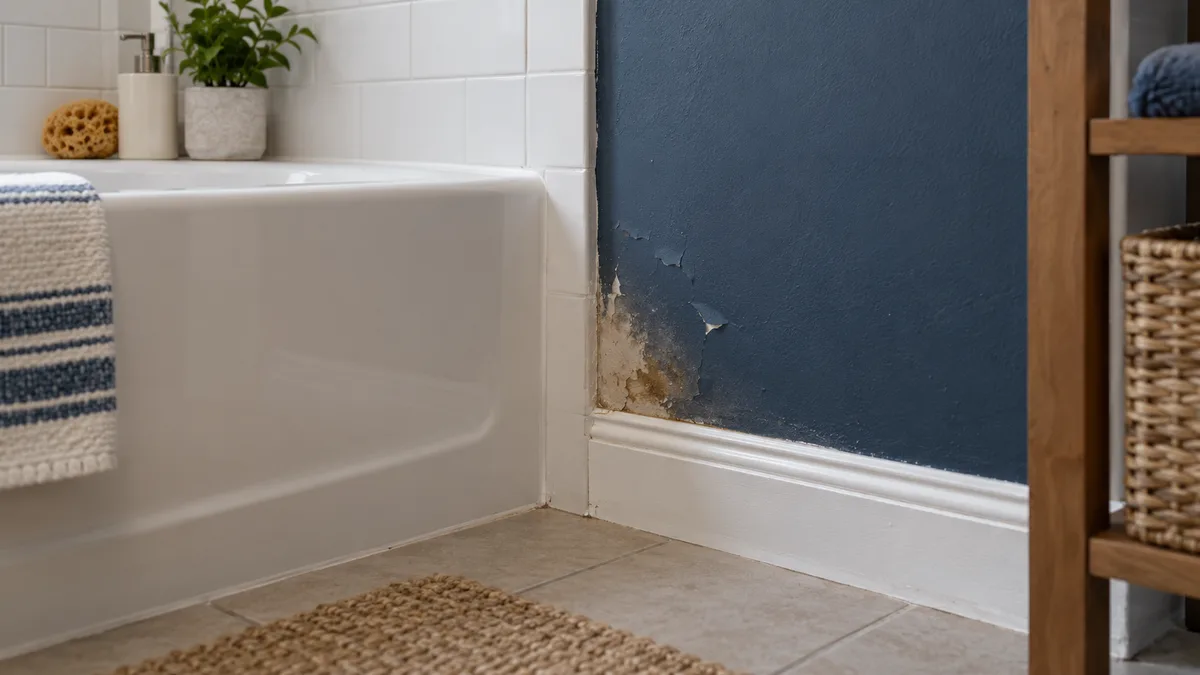
Bathroom water damage can first appear outside the tiled area: paint bubbles on the adjoining wall, trim swells near the tub or a stain develops on the ceiling below. Those clues deserve attention even if the grout inside the shower looks tidy.
A photograph cannot confirm where the water is traveling. The purpose of an inspection is to trace the source and determine which materials are affected. Cosmetic repairs made before that work can conceal useful evidence while the problem continues.
Which signs deserve a closer look?
| Visible clue | What the assessment should establish |
|---|---|
| Peeling paint or swelling trim beside the tub | Splashing, joint leaks, concealed moisture or another source |
| Soft, distorted wall finish near the surround | Material condition and extent of wetting |
| New ceiling stain under the bathroom | Plumbing, drain, enclosure and other possible sources |
| Persistent musty odor after normal drying | Moisture conditions and possible concealed affected materials |
| Loose tile with recurring damp joints | Bond, backing and water-management condition |
Separate the possible water sources
A supply leak can occur even when nobody uses the shower. A drain leak may appear during use. Escaping spray can wet the room without a failure behind the tile, and condensation can affect cold surfaces. These patterns help guide an investigation, but timing alone is not a diagnosis.
The assessment may include plumbing checks, examination of enclosure details, moisture readings and controlled access where justified. Moisture meters are tools, not a standalone verdict: readings depend on the material and instrument and need interpretation. Avoid repeated home flood tests that add water to an already damaged area.
What to do while arranging an assessment
EPA guidance recommends drying water-damaged areas promptly, generally within 24–48 hours where possible, to reduce mold growth risk. That is a response goal, not proof that a concealed cavity will be dry after two days. The extent of wetting and access determine the drying plan.
- Stop using the affected fixture when it causes active leaking or further wetting.
- Photograph the damage and note when it appears or changes.
- Keep clear of unstable ceilings and water near electrical fittings; involve the appropriate qualified trade.
- Have the water source corrected and affected materials assessed promptly.
- Confirm the area is dry and sound before it is closed, tiled or painted.
Why regrouting does not answer every leak
Grout repairs address the visible joint material. A leak at a plumbing connection or a damaged waterproofing detail requires its own correction. Grout sealer should not be treated as a substitute for rebuilding failed water-management connections.
Opening a limited area may reveal sound adjacent materials, allowing a smaller repair. It may instead show damage extending beyond the visible stain. Agree on how new findings will be documented and how the scope will be adjusted before the opening is made.
If a stain has reached the ceiling below, our water-damaged drywall ceiling guide explains the finish repair decision after the source is fixed.
When specialist help belongs in the plan
Use the appropriate plumbing professional for suspected supply or drain problems. Extensive moisture damage or mold-affected materials may need a qualified remediation assessment. EPA advises additional guidance for substantial water damage or mold growth exceeding roughly 10 square feet; small visible spots may not reflect the concealed extent.
A bathroom repair professional can help assess the visible finishes and reconstruction scope. The proposed work should state what evidence is available and which concealed conditions remain uncertain.
For deciding what can stay and what may need reconstruction, use our bathroom repair or remodel guide.
For reconstruction after the source and affected materials are addressed, see our bathroom remodeling service on Long Island.
Common questions
Can water be behind tile with no visible mold?
Yes. Visible mold is not required for a moisture problem. Investigate active leaks, soft materials or unexplained swelling even when the tile face looks clean.
Can a moisture meter tell me exactly where the leak starts?
No. Readings can help locate affected areas, but the source must be established through interpretation and other checks. Material and instrument differences affect results.
Should I remove tiles myself to look for water?
Avoid exploratory removal without a repair plan. It can damage waterproofing, disturb affected materials or release adjacent tiles. Controlled access should be chosen as part of the assessment.
Does the whole bathroom need replacement after a leak?
Not necessarily. Scope depends on the source, affected materials and whether a sound, continuous wet-area assembly can be restored. A limited repair or shower rebuild may be sufficient.