
Maintenance
Grout vs. Caulk: Where Does Each Belong in a Bathroom?
By Ivan ·
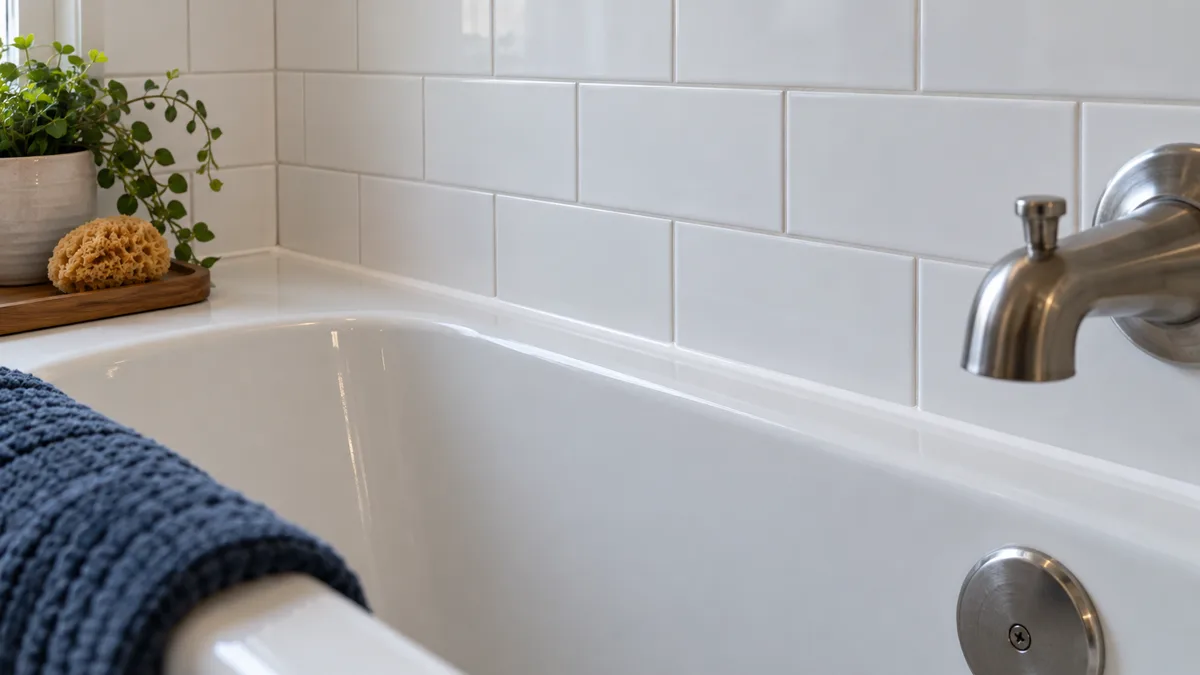
Start with the location of the gap, then choose the material. A joint between two tiles on a flat wall has a different job from the joint where that wall meets the tub. Choosing by color alone can put a rigid filler in a place that needs to move.
The word caulk covers many products. For a wet joint, check the sealant label for the surfaces, exposure and joint dimensions it allows. A paintable trim caulk and a wet-area silicone may look similar in a tube but serve different purposes.
Where the materials commonly belong
| Location | Common material/detail | Reason |
|---|---|---|
| Joints between tiles on a flat wall or floor | Compatible grout, except designated movement joints | Fill the tile field joints |
| Inside corner between tiled walls | Flexible sealant or approved movement profile | Accommodate movement between planes |
| Tile wall meeting a tub or shower base | Enclosure-approved flexible joint detail | Join different surfaces that can move differently |
| Tile meeting a vanity countertop | Compatible flexible sealant | Accommodate a material transition |
| Shower drain, weep openings and system-specific gaps | Manufacturer detail | Avoid blocking designed water paths |
Why hard grout can crack at a corner
LATICRETE explains that movement joints allow a tile installation to move and limit stress in its rigid surface. Two adjoining walls or a tub and tiled wall may move differently. Filling that transition with ordinary grout can leave a visible crack even when the surrounding field joints remain sound.
A flexible joint is a designed detail, not just a softer substance smeared across a gap. Joint width, depth and adhesion surfaces matter. Some systems use a movement profile instead of a replaceable sealant bead; preserve the approved detail rather than automatically covering it.
Read these details before buying a matching tube
Sanded, unsanded and color-matched labels do not decide whether a product is suitable for a movement joint. Likewise, epoxy grout can have different absorption and cleaning properties from cement grout, but it does not remove the need for movement accommodation.
Ordinary cement grout may benefit from a compatible sealer, while other grout products may not require one. Follow the grout manufacturer rather than assume every joint should be sealed on the same schedule.
- Wet-area approval and compatibility with the tub, tile or stone.
- Allowable joint width and depth; required backing or primer.
- Whether the product is paintable and whether that matters at this location.
- Required preparation, temperature and water-exposure waiting time.
- Cleaner compatibility and any natural-stone staining limitations.
Can you put caulk over cracked grout?
A thin covering over loose grout may hide the line without creating the intended movement joint. Assess whether the joint should contain grout at all, remove failed material appropriately and prepare the required bonding surfaces. In a shower, careless cutting or scraping can damage a membrane directly behind the tile.
Do not fill drain weep paths or manufacturer-specified openings because they look unfinished. If the existing detail is unclear, obtain the enclosure instructions or have the joint assessed before changing it.
If the material is right but the bead keeps separating, read why shower caulk keeps failing.
For deciding whether the surrounding bathroom can stay, use our bathroom repair or remodel guide.
For joint replacement and regrouting, see our tile and grout repair service on Long Island.
Common questions
Should a shower corner be grouted or caulked?
It generally needs flexible movement accommodation, using suitable sealant or an approved profile as specified by the system. Ordinary grout should not be substituted merely for a closer color match.
Is color-matched caulk the same as grout?
No. Color describes appearance. Check the actual material, wet-area approval and movement capability before using it at a corner or tub joint.
Does epoxy grout make a shower waterproof?
Do not rely on grout selection to replace the shower waterproofing assembly. The backing system, seams, transitions and drain details must manage water as designed.
Should I seal every gap around a shower base?
No. Follow the base and enclosure manufacturer instructions. Some assemblies include intentional drainage paths that must remain open.