
Home Repairs
Can a Rotted Window Sill Be Repaired?
By Ivan ·
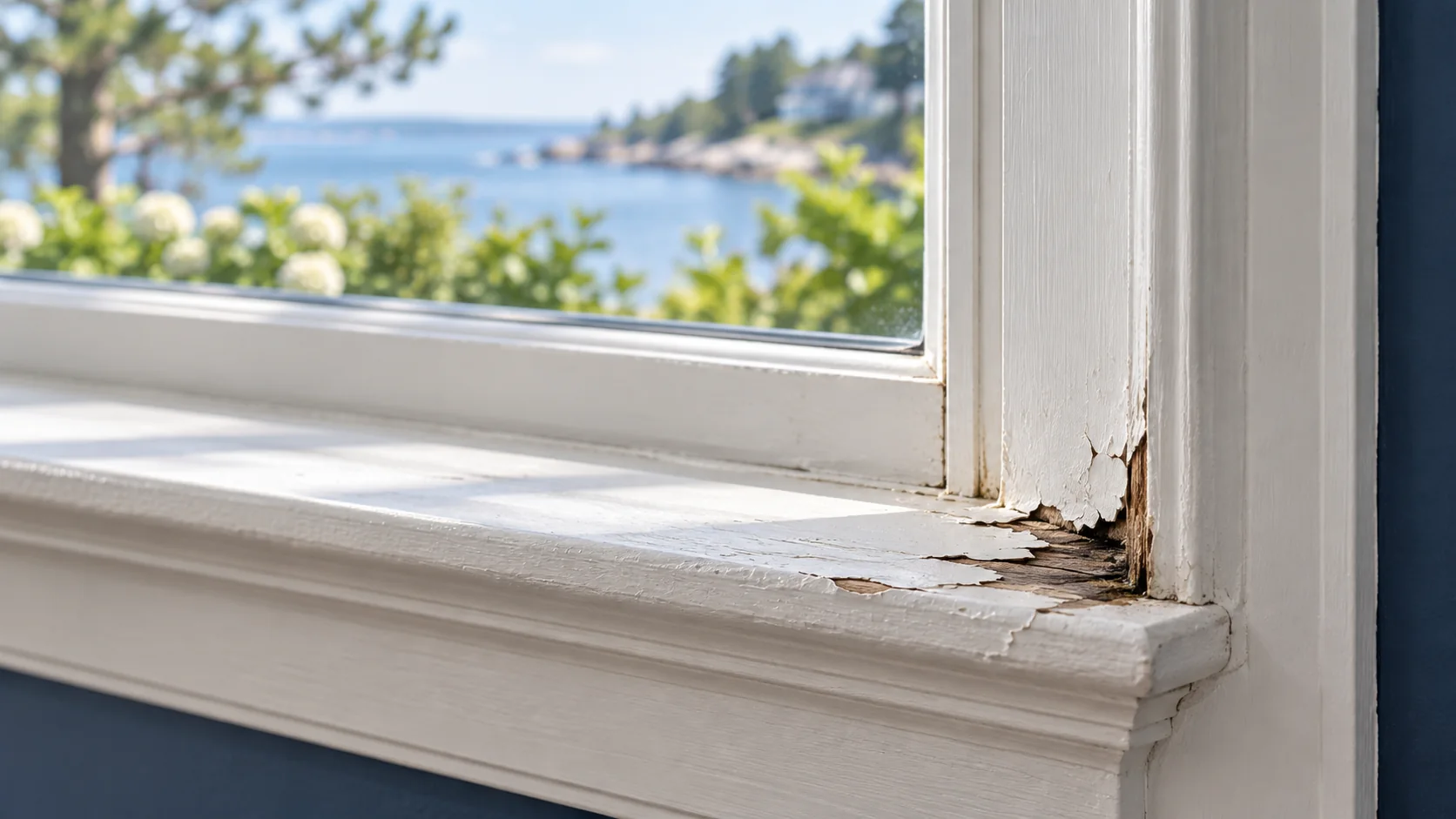
A rotted window sill does not automatically mean the entire window must be replaced. If the damage is limited to the sill or exterior trim and the sash, frame, and surrounding opening are sound, a section repair or sill rebuild may be possible. If the jambs or wall framing are soft or wet too, the scope needs to be assessed before cosmetic patching.
The first decision is how far the moisture damage extends—not which filler to buy.
What the visible signs can tell you
Look for changes in several places around the lower corners, not only the painted face of the sill.
| Clue | What it may indicate | Next step |
|---|---|---|
| Paint is cracked or blistered | Moisture may be getting beneath the finish | Check nearby joints and the top of the sill |
| Wood is dark, soft, or crumbling | Rot may extend beneath the surface | Have the affected sill and lower jamb inspected |
| Caulk has separated at a joint | Water may be entering around trim | Identify the water path before resealing |
| Interior paint or drywall is stained | Water may have moved past the exterior trim | Assess the frame and wall opening, not just the sill |
| The sash sticks or frame feels loose | Damage may involve more than exterior trim | Inspect operation and frame condition before choosing repair |
When a sill repair can make sense
A localized repair may be appropriate when sound material remains around the damaged area and the rest of the window still operates, closes, and locks properly. Depending on the extent and construction, a repair may involve removing damaged wood, rebuilding or replacing a section, and restoring the finish.
The water path matters. If failed joints, flashing, or trim details keep wetting the same corner, a patch can fail again. The estimate should explain what was damaged, what is being repaired or replaced, and how the opening will be protected from recurring water.
The broader window repair-or-replacement guide explains how sill condition fits into the decision about the sash, glass, and frame.
When the problem may be larger than the sill
Be cautious when the lower jambs are soft, trim joints keep opening, water has reached interior finishes, or the sash no longer sits squarely. Those signs can mean the sill is only the visible part of a wider opening problem. Replacing or filling the sill without checking the adjoining material may leave the source of the damage in place.
If the affected area is above a porch roof, on an upper floor, or close to overhead wiring, do not climb or probe from an unsafe position. Photograph what can be seen from the ground and have the access and repair scope assessed.
Why a quick caulk bead is not always the repair
Caulk can seal a suitable joint, but it cannot restore wood that has lost its strength or correct a window that is leaking through another part of the assembly. Sealing over wet or deteriorated material can trap moisture. The surface should be dry and sound enough for the selected repair, and the cause of recurring water should be addressed.
The Department of Energy’s retrofit guidance treats window sealing as part of the complete opening, including the space between the frame and rough opening. That is why an inspection should distinguish a trim joint from a leak deeper in the wall assembly.
What to photograph for an estimate
- A full view of the window from outside and inside, if safely accessible.
- Close-ups of the sill ends, lower jambs, and any paint or caulk failure.
- Any staining or bubbling on the inside wall below the window.
- A note on when you first noticed the problem and whether it returns after rain.
- Whether the sash still opens, closes, and locks normally.
Get the sill and the cause assessed together
Blue Whale’s window repair service includes sill and brickmould repair or rebuilding, exterior sealing, and single-window work. An estimate should identify whether the visible sill is the full problem or whether the jamb, sash, or surrounding opening also needs attention.
Common questions
Can I repair a rotted sill without replacing the window?
Often, if the rot is limited to the sill or trim and the rest of the frame and opening are sound. The damaged area and adjoining material should be inspected before deciding.
Should I paint over a soft window sill?
No. Paint will not restore softened wood or stop water entering through an open joint. Find the moisture source and repair the damaged material before refinishing.
Does a rotted sill mean water is inside my wall?
Not necessarily, but it is possible. Staining indoors, soft lower jambs, or recurring leaks are reasons to inspect the frame and wall opening.
Can a sill be repaired in winter?
It depends on access, moisture, temperature, and the materials needed for the repair. A contractor can assess whether conditions allow a lasting repair or whether the work should wait.