
Home Repairs
Should You Repair or Replace a Window?
By Ivan ·
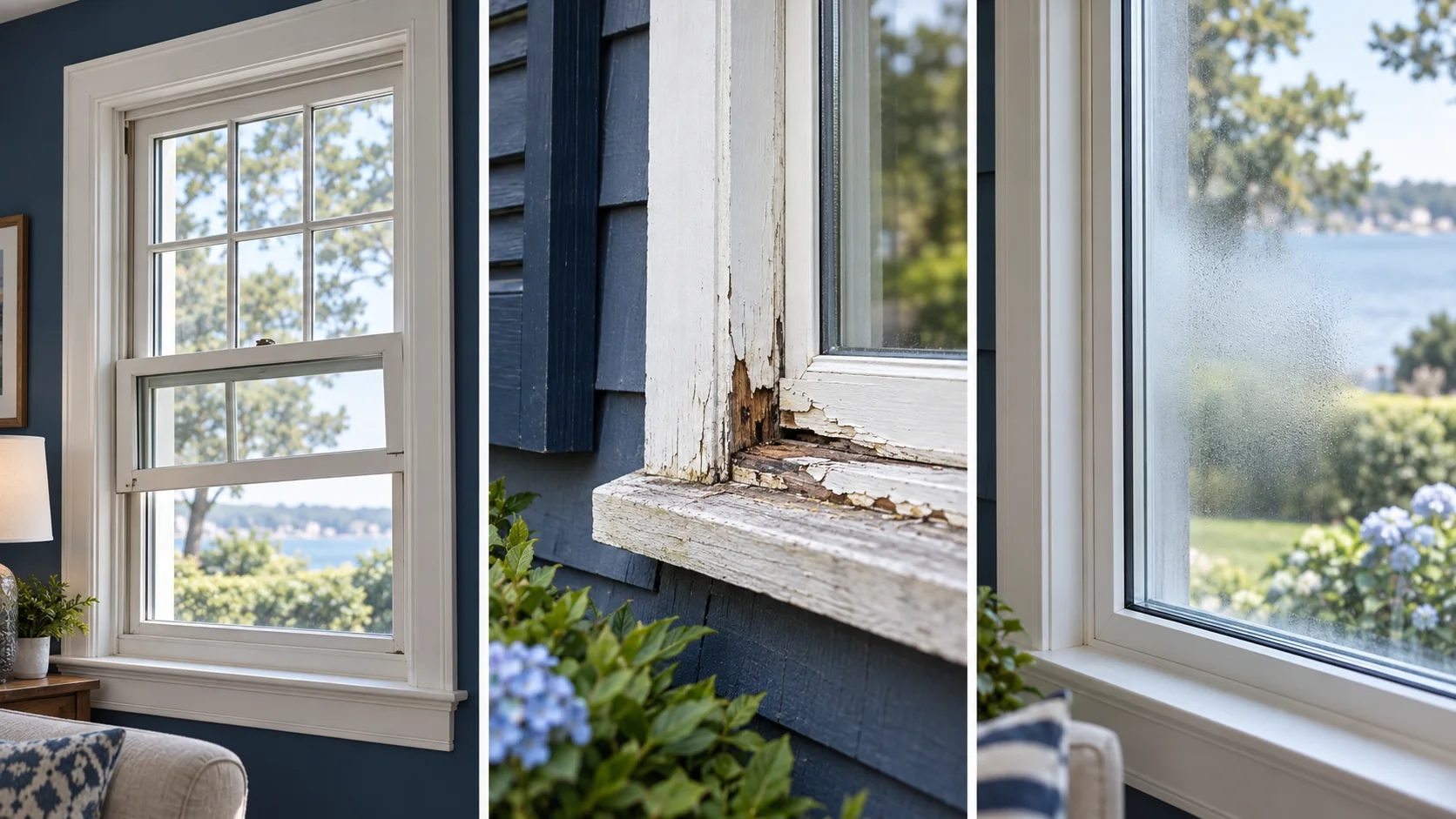
A window that sticks, drops shut, leaks air, or looks cloudy may need one part repaired—or a larger replacement. Start by identifying what has failed: operating hardware, sash, sill, insulated glass, frame, or the joint between the window and the wall. If the surrounding frame is sound, a targeted repair may restore the window without replacing the whole unit.
This guide helps sort the common cases. The right answer still depends on the window type, the condition of the opening, available replacement parts, and the result you want.
Match the symptom to the part
Use the first observation to decide what deserves a closer inspection. A symptom is a clue, not a diagnosis.
| What you notice | First area to check | Likely next step |
|---|---|---|
| Sash will not stay open or slides down | Balance, pivot shoe, or sash hardware | Identify the window model and inspect the operating hardware |
| Paint is peeling and wood feels soft at the bottom | Exterior sill, lower jambs, and trim joints | Find how far moisture damage extends before patching |
| Draft with the window shut | Weatherstripping, locks, sash fit, and frame joint | Separate an air-seal repair from a window replacement |
| Haze remains between double panes | Sealed insulated glass unit | Ask a glazing or window specialist whether the glass unit is replaceable |
| Several windows are hard to operate or water is entering | Frames, openings, and installation details | Get the broader condition assessed before choosing replacements |
When a repair is usually worth assessing
A stuck sash, worn balance, damaged screen, loose lock, or isolated trim problem may be limited to one part. The case for repair is stronger when the frame is square and solid, the sash closes and locks, water is not reaching the wall, and the correct part is available.
A repair estimate should describe the failed component and the work needed to restore operation—not just apply caulk or paint over a symptom. If a balance has failed, the window may need model-specific hardware. If a sill is soft, the contractor should inspect the adjoining jambs and trim before deciding whether a patch will last.
For a sash that drops or will not stay raised, see how a window balance affects sash movement.
For a closer look at exterior wood damage, use the window sill rot repair guide.
When replacement deserves a closer look
Replacement becomes more reasonable when rot or water damage has spread through the frame or into the wall opening, the sash no longer fits or locks securely, multiple parts have failed together, or a lasting repair depends on material that cannot be sourced. Repeated repairs to the same area are also a reason to compare the next repair with the replacement scope.
Fog between insulated glass panes is different from moisture on the room-side surface. The sealed glass unit may be replaceable without replacing the entire frame, but that depends on the window design and parts. A glass specialist can confirm whether the glass unit, sash, or full window is the appropriate scope.
Read the separate guide to fog between window panes and glass-unit replacement before deciding that the entire window must go.
Compare the scope, not just the label
“Repair” and “replacement” can each describe very different jobs. A sash balance replacement is not the same scope as rebuilding a rotted sill. An insert window may fit within a sound existing frame; a full-frame replacement changes more of the opening and finish. Ask what stays, what comes out, how water is managed, and what is included in the finish work.
If only one or two windows are failing, it is reasonable to compare targeted work on those openings with the cost and disruption of replacing more. ENERGY STAR recommends selecting replacement windows for the home’s climate zone; it does not make every isolated hardware or trim failure a whole-house replacement decision.
What to include when you request an estimate
- Photograph the whole window, then the sash, sill, hardware, or glass condition up close.
- Say whether the window is double-hung, sliding, casement, or another style if you know.
- Describe what happens when you open, close, lock, or tilt it.
- Mention any soft wood, recurring water, fog between panes, or window that will not lock.
- Share the brand or a photo of the manufacturer label if it is visible.
A practical next step
Blue Whale’s window repair and replacement service covers stuck sashes, balance and hardware work, sill and trim repair, screens, sealing, and single-window insert replacements. Share the window symptom and photos so the scope can be assessed. For sealed-glass replacement, confirm that the provider handles insulated glass units; some cases belong with a glazing specialist.
Common questions
Does one bad window mean I should replace them all?
No. If the rest of the windows work and the frame around the problem opening is sound, a repair or single-window replacement may be the better scope. Compare the condition of each window rather than assuming one failure applies to the whole house.
Can a window be repaired if it is drafty?
Often. A draft may come from weatherstripping, a lock that does not pull the sash tight, a poor sash fit, or a gap around the frame. Find the leak path before choosing between sealing work and replacement.
Can fog between panes be fixed without replacing the whole window?
Sometimes. A glass or window specialist can check whether the insulated glass unit can be replaced while keeping the existing sash or frame. If the frame is also damaged, a larger replacement may be needed.
When should I stop operating a window?
Stop if the sash is loose, drops unexpectedly, will not lock, has broken glass, or appears to be separating from its frame. Keep people clear and arrange an assessment rather than forcing it.