
Home Repairs
Painting After Drywall Repairs: Why Patches Show Through
By Ivan ·
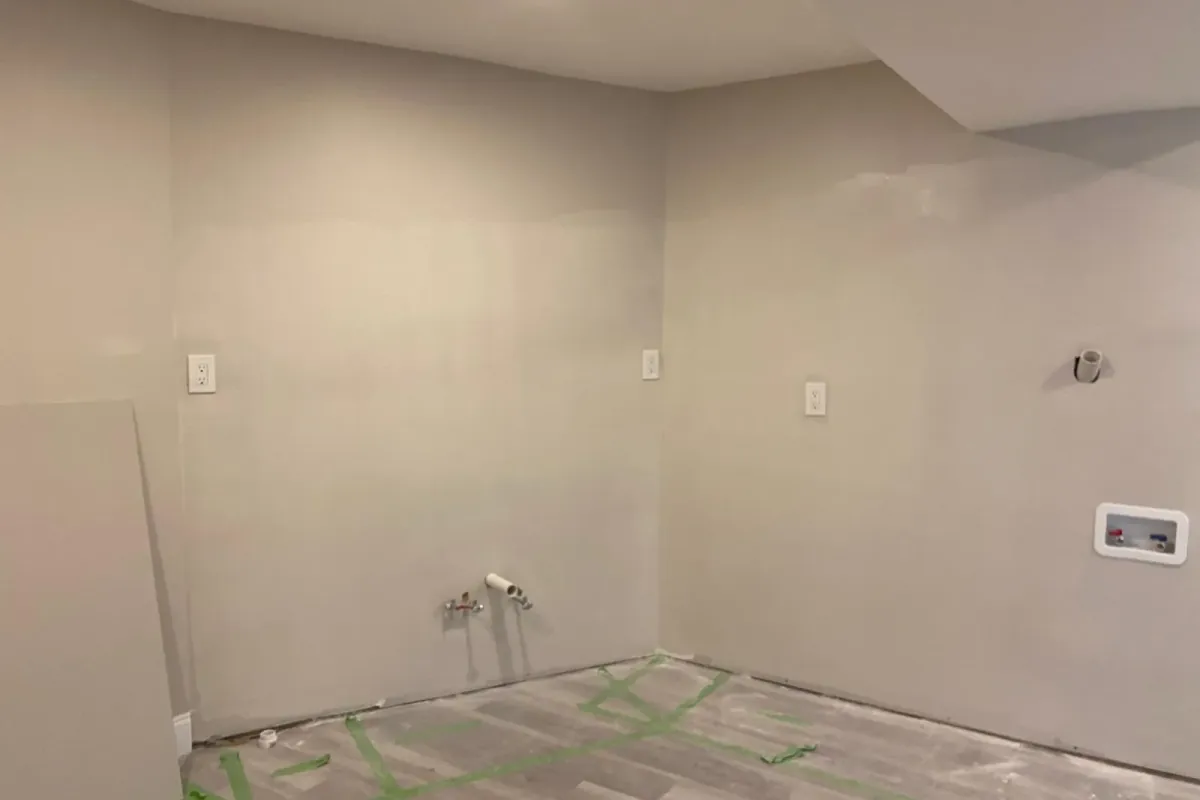
If a drywall patch shows after painting, first determine whether you can see its edges, its texture or a difference in color and sheen. These clues point to different finishing problems. A glossy rectangle may need a coating assessment; a ridge casting a shadow needs surface correction.
This guide covers the finish after a repair. It does not decide whether damaged board is safe to retain or which structural patch belongs in an opening. Those decisions come earlier, before the room is ready for paint.
Four reasons a patch remains visible
| What you notice | Possible finishing issue | What to assess |
|---|---|---|
| A line or shadow at the edge | A raised or depressed repair | Surface level and feathered edges |
| A smooth island in a textured wall | Different roller or wall texture | Texture across the intended finish area |
| A dull or shiny patch | Uneven absorption or coating build | Primer compatibility and finish uniformity |
| A different color around the repair | Paint mismatch, staining or incomplete coverage | Coating identity, stains and application requirements |
Resolve the wall condition first
If the board itself is soft, swollen or otherwise damaged, begin with whether the drywall should be repaired or replaced.
A finish should not conceal an active leak, continuing movement or a loose repair. The cause needs to be resolved so the prepared surface has a sound base.
Once the repair is suitable for finishing, its drying and preparation requirements depend on the repair material, thickness and conditions. Follow the selected products rather than assuming every patch is ready on the same schedule.
Flatness and texture are separate checks
Look along the wall in side light to identify a high edge or depression. A paint coat is too thin to serve as a leveling treatment. The required correction might be a local adjustment or a larger finishing area, depending on the wall.
Where many repairs or uneven surfaces extend across a room, compare the scope with when to skim coat a drywall wall.
After leveling, consider the surrounding texture. A repaired section that feels smooth may still look different beside a stippled roller finish. The finish plan should address both the wall and the application method.
Choose primer for the actual substrate
Primer can help create a suitable base over prepared repairs and other surfaces, but the right product depends on what is present. Bare joint compound, previously painted wall, stained material and exposed or damaged facing are not automatically the same priming problem.
Sherwin-Williams distinguishes primer functions such as sealing a porous surface and addressing particular substrate conditions. Follow the chosen primer and finish instructions, including compatibility, drying and application. A product labeled paint-and-primer does not resolve every substrate problem.
Decide where the final coat will stop
After preparation, use the touch-up versus full-wall repaint decision to set realistic appearance expectations.
A repaired spot may still contrast with aged paint around it. Repainting the affected wall to its corners often provides a clearer finish boundary than repeatedly extending a small patch. The existing room, light and acceptable result should guide that choice.
Coordinate repair and paint in one scope
Our drywall repair service covers assessment of repairable walls and ceilings.
For the finish that follows, our interior painting service can be scoped with the preparation, primer and repainting area identified together.
Send photographs under both daylight and room lighting. Include the repair history and any paint information you have. That helps distinguish a surface problem from an appearance mismatch before work is scheduled.
Common questions
What does paint flashing mean?
It generally describes an uneven appearance in sheen or color across a coated surface. On a repaired wall, differences in absorption, application or surface preparation can contribute; the term alone does not identify the cause.
How long should a patch dry before primer?
Use the repair material’s instructions and the conditions at the job. Patch depth, product type, temperature and humidity can change the interval; there is no single reliable wait for every repair.
Can primer hide a raised patch edge?
Primer prepares the surface for the coating system. A raised or recessed edge needs appropriate surface correction rather than relying on primer to level it.
Does the whole room always need painting?
No. The affected wall or another natural finish boundary may be sufficient. Matching the surrounding paint and the room’s lighting determines how noticeable that boundary will be.