
Home Repairs
When Should You Skim Coat a Drywall Wall?
By Ivan ·
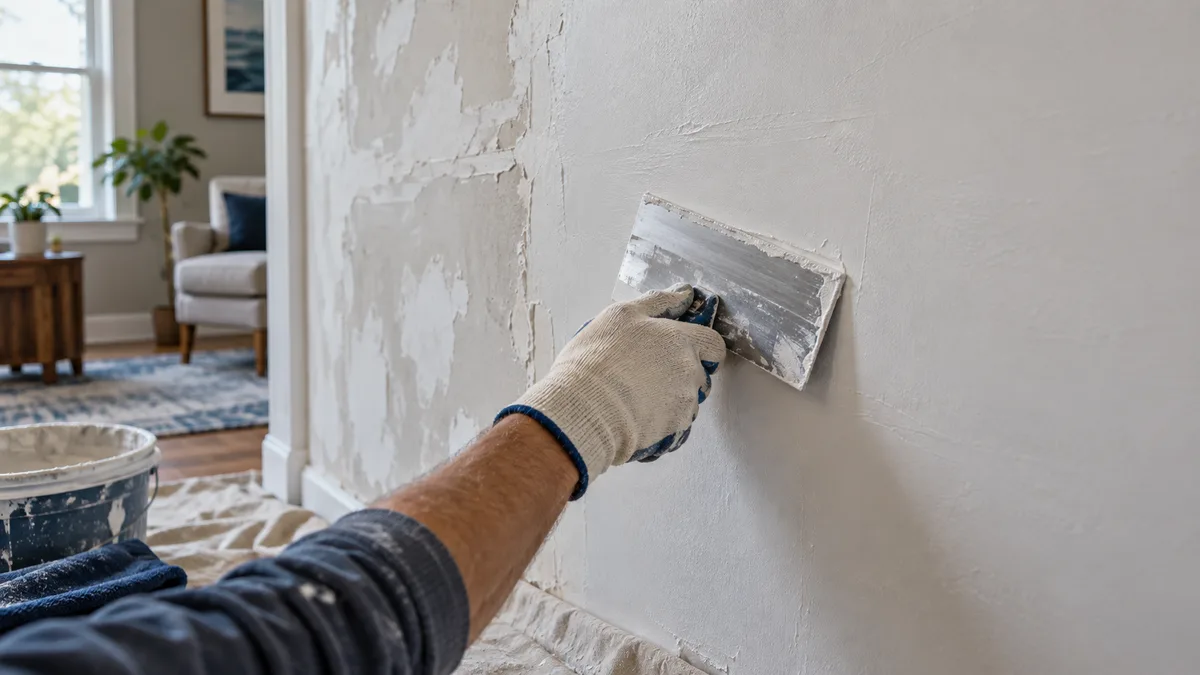
If the wall is dry and solid but covered in shallow ridges, old patch edges, or uneven texture, a skim coat may create a more consistent surface for paint. If only one spot is damaged, a local patch is usually the smaller job. If the board is wet, loose, or crumbling, a skim coat is the wrong first step.
Patch, skim, or replace?
| Wall condition | Likely approach | Why |
|---|---|---|
| One hole or short damaged seam | Local patch and blend | The rest of the wall is sound and even |
| Many shallow flaws across sound board | Skim coat after preparation | A continuous finish can reduce visible transitions |
| Loose tape or recurring crack | Correct and re-tape first | A thin coat will not hold a moving joint |
| Wet, soft, or badly delaminated board | Fix cause and assess replacement | Finishing cannot restore failed material |
Why light and paint matter
USG notes that strong side lighting and paints with sheen can reveal differences between gypsum board face paper and finished joints. A full skim coat can reduce those variations when a higher finish standard is needed. It is a visual finish choice, not a mandatory upgrade for every room.
Before work begins, look at the wall in the light it normally receives. Decide whether the goal is to hide one repair, smooth an entire wall, or prepare for a sheen that will reveal minor defects.
What a durable skim-coat job includes
For a damaged section rather than a surface-wide finish problem, start with our drywall repair or replacement guide.
Our Long Island drywall repair and skim coating service can scope patches, skim coating, and the final paint blend together.
- Fix water problems and remove loose paint, tape, or damaged compound.
- Repair holes and unstable seams so the underlying surface is sound.
- Apply thin finish coats appropriate to the existing surface and desired smoothness.
- Inspect under the room’s normal lighting, then prime and paint consistently.
Common questions
Will skim coating fix a recurring drywall crack?
No. A returning crack needs its cause and joint condition assessed first. Skim coating may be part of the final finish after the underlying repair.
Do all walls need a full skim coat before painting?
No. Sound walls with isolated damage may only need local repair and primer. A full skim is a finish choice for widespread surface variation or demanding lighting and paint conditions.
Can you skim coat over water damage?
Not until the water source is fixed, the wall is dry, and any failed board or finish is removed. A skim coat does not dry or restore damaged material.