
Home Repairs
Should Damaged Drywall Be Repaired or Replaced?
By Ivan · · Updated
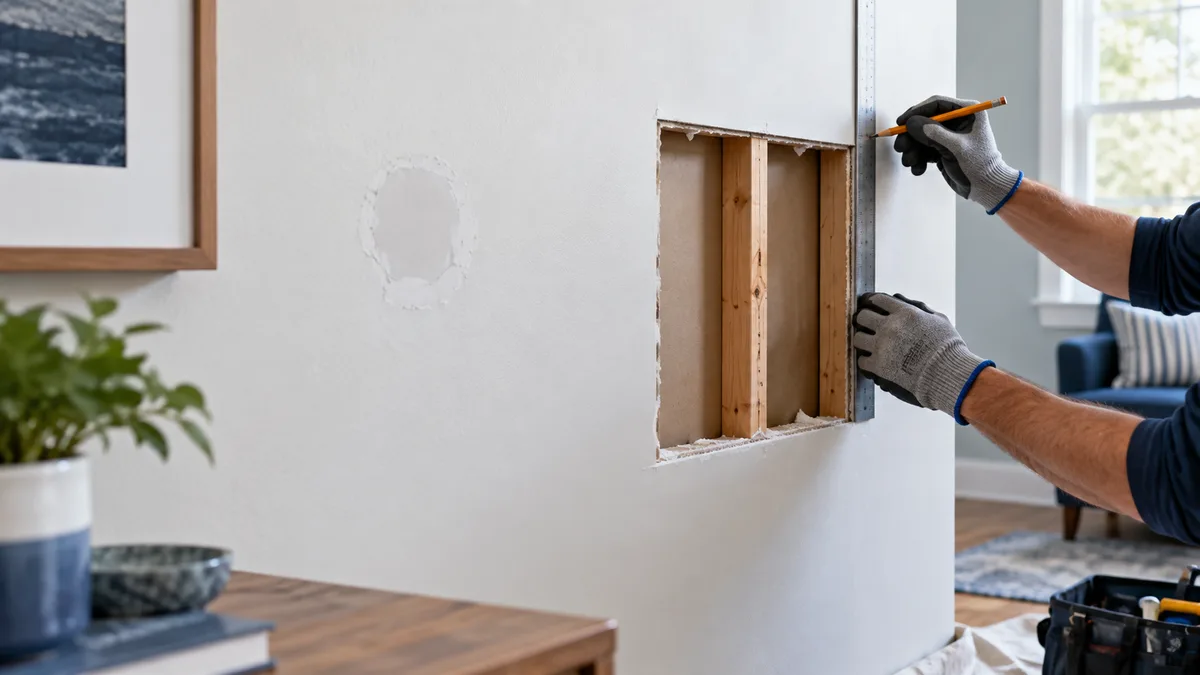
A dry impact hole can usually be patched, even when the opening is large enough to require a new piece of board. Wet, soft, swollen, or contaminated board is a different decision. Find and fix the cause first, then assess whether the affected section is still sound enough to keep.
Damage that is almost always a repair
| Damage | Typical fix | Visits |
|---|---|---|
| Nail holes, dents, scuffs | Spackle and touch-up | 1 |
| Doorknob or impact holes | Mesh or California patch | 1 |
| Settlement cracks | Tape and compound, feathered wide | 1 to 2 |
| Popped nails or screws | Re-fasten to stud, patch, paint | 1 |
| Failed tape seams | Remove loose tape, re-tape, blend | 2 |
| Dry water stain, leak fixed and board sound | Confirm dryness, stain-block primer and paint | Depends on assessment |
When board should be replaced
Replacement often means only the affected section, supported and finished to meet the surrounding wall or ceiling. Fire-rated assemblies and extensive contamination need the right specialist and replacement details. See the ceiling guide for the sequence after a leak.
- Sagging or bulging ceiling board (it has been saturated and lost structure)
- Board that crumbles when pressed, a sign of repeated wetting
- Visible mold or a musty cavity that needs proper assessment before closing
- Board exposed to floodwater or sewage
- Widespread damage across a wall where patching would exceed re-boarding
The mistake that causes mold problems
Closing a wall before fixing the water source and drying the cavity traps the problem. The EPA advises drying water-damaged areas promptly, usually within 24–48 hours to help prevent mold growth. A moisture meter can help compare areas, but no single reading alone proves gypsum board is safe to keep. Assess the board, seams, cavity, and water source together.
Why patches show, and how they should not
A visible patch can come from a raised compound edge, unmatched texture, or paint touch-up on an aged wall. The repair needs a smooth transition, appropriate primer, and often paint across the full wall plane. Side lighting makes small ridges especially easy to see.
Choose the guide for your specific symptom
A crack that returns after painting needs a cause check before another coat of compound. Start with why drywall cracks keep coming back.
A stain or sagging area overhead follows a different sequence. Read how to assess a water-damaged drywall ceiling after the leak is addressed.
For impact damage, compare drywall hole patch methods by opening size and backing.
If the board is sound but the wall has many old repairs, see when skim coating helps and when it will only hide a deeper problem.
When to ask for a repair assessment
If the cause is fixed and you want the damaged area evaluated and blended, our drywall repair service on Long Island covers patches, board replacement, finishing, and paint blending. Share a wide photo, a close-up, and any known leak history so the estimate starts with the right questions.
Common questions
Does a large hole mean the whole wall needs replacement?
Usually no. A large dry hole can often be squared, backed, patched with new board, taped, and finished. The condition of the surrounding board and framing matters more than the opening alone.
Can a ceiling stain simply be painted over?
Only after the leak is fixed, the area is dry, and the board and cavity are sound. A persistent or expanding stain, soft board, or sagging needs investigation first.
Can wet drywall be dried in place?
Sometimes, for clean water damage addressed promptly with no swelling and intact seams. Floodwater, contamination, swelling, or failed drying can require removal. An in-person assessment decides.
Will a repaired patch disappear under paint?
A smooth finish, matched texture, primer, and painting the full wall plane give the best chance of a blended result. Side lighting and aged paint can still reveal small differences.