
Maintenance
Why Is My Deck Stain Peeling?
By Ivan ·
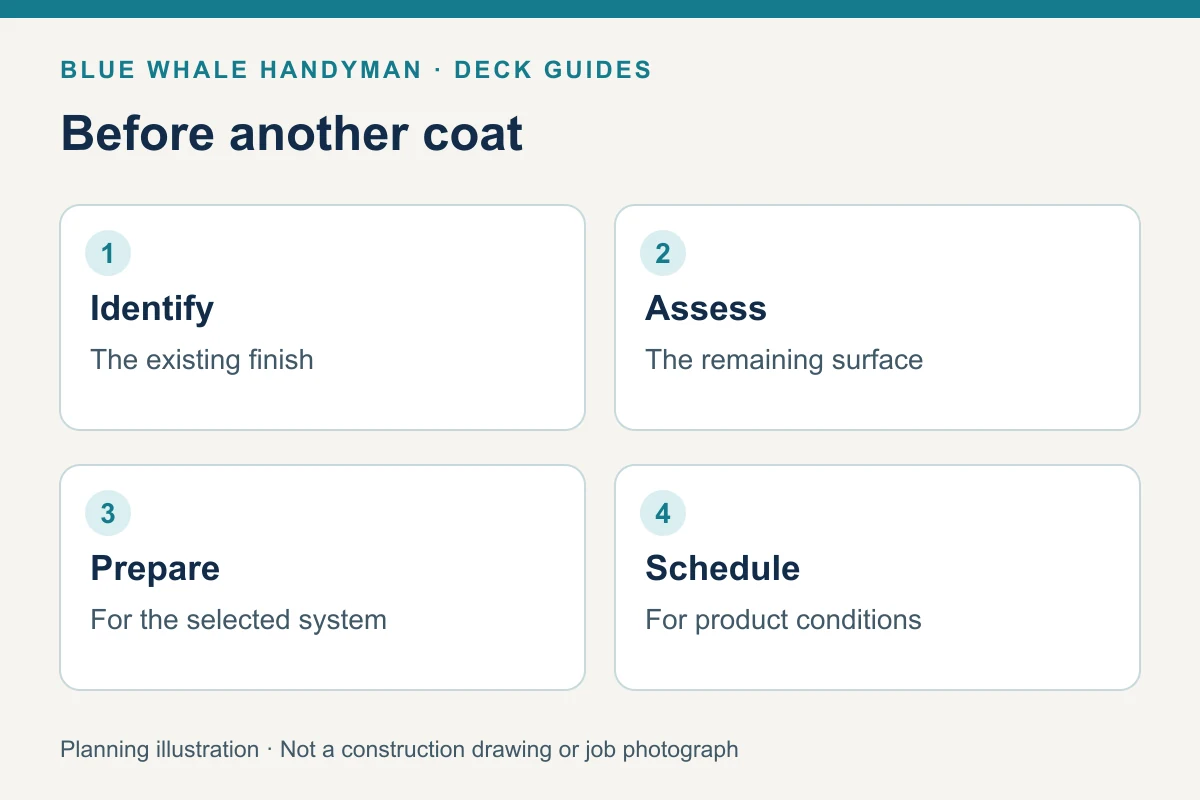
Deck stain may peel when the coating is not adhering adequately to the surface beneath it. The important next step is to identify the old coating and assess the surface, not immediately choose another color.
A peeling appearance alone cannot establish whether the cause was preparation, coating compatibility, surface moisture or application conditions. Keep any product information and records of the previous work. They can help the person assessing the finish distinguish an isolated worn area from broader coating failure.
Distinguish a loose coating from fading or dirt
Fading, surface dirt and lifting flakes are different observations. A weathered appearance does not automatically mean the same preparation is needed everywhere. Photograph both failing and intact areas so the assessment can consider the variation.
Also note where the failure occurs: horizontal walking boards, rail tops and vertical faces can have different exposure and coating histories. Do not assume that a product suitable for one surface is specified for all the others.
Find the previous product if possible
Look for the container, invoice or product name rather than guessing whether the finish was paint, a solid-color stain or a penetrating stain. Knowing what was applied helps establish what the next product can be applied over.
If the product is unknown, say so. A proposed preparation method should address that uncertainty and any testing or trial area the contractor considers appropriate. A new product’s label is the starting point for compatibility, preparation and application requirements.
Preparation depends on the remaining coating
Behr’s guidance for wood with a peeling finish explains that old coating can interfere with a new finish and describes preparation before recoating. Its instructions apply to the products named, rather than every deck coating.
Ask which material must be removed, how sound areas will be handled and what surface will be ready for coating. Cleaning, stripping and sanding are different operations; the quote should state which ones are proposed and where. This is a scope discussion, not a universal chemical or sanding recipe.
| Question | Why it belongs in the scope |
|---|---|
| What finish is already present? | Compatibility and preparation depend on the existing system |
| What is lifting or no longer sound? | A new coating needs an appropriately prepared surface |
| What condition is the wood in? | Coating work cannot substitute for necessary repairs |
| What does the selected label require? | Drying, weather conditions and recoating are product-specific |
| What should the result look like? | Old and repaired areas may not produce identical appearance |
Do not hide a repair problem beneath a finish
If boards are damaged or a railing is unstable, arrange the relevant assessment before cosmetic work. A smooth coat does not establish that those components are suitable. Keep the repair scope and the coating scope clear, even if one crew handles both.
For an overview of concerns that need assessment, use our deck warning-signs guide.
Ask for a complete preparation and finish proposal
If you are unsure whether the deck needs cleaning alone, compare deck cleaning and restaining.
Request a written preparation method, product name, included surfaces, application conditions, access restrictions and cleanup arrangements. Agree what will happen if the trial area or opened surface changes the proposed work.
For the assessment and proposed repairs or refinishing, see our deck repair and restoration service.
Common questions
Can I apply a darker stain over a peeling finish?
A darker color does not resolve a loose underlying coating. The old surface still needs assessment and preparation suitable for the chosen product.
Does every deck need complete stripping before restaining?
No universal rule applies. The existing finish, its condition, compatibility and the selected product instructions determine the appropriate preparation. Ask which areas require removal and why.
Can a deck be washed and stained on the same day?
Do not assume it can. The surface and weather need to satisfy the selected product’s preparation and application requirements. Schedule the work around those conditions rather than a fixed promise.
Will refinishing make new and old boards match exactly?
Not necessarily. Different wood, weathering and prior coatings can affect the result. Discuss a sample area and realistic appearance expectations before committing to the whole surface.