
Home Repairs
Why Do Drywall Cracks Keep Coming Back?
By Ivan ·
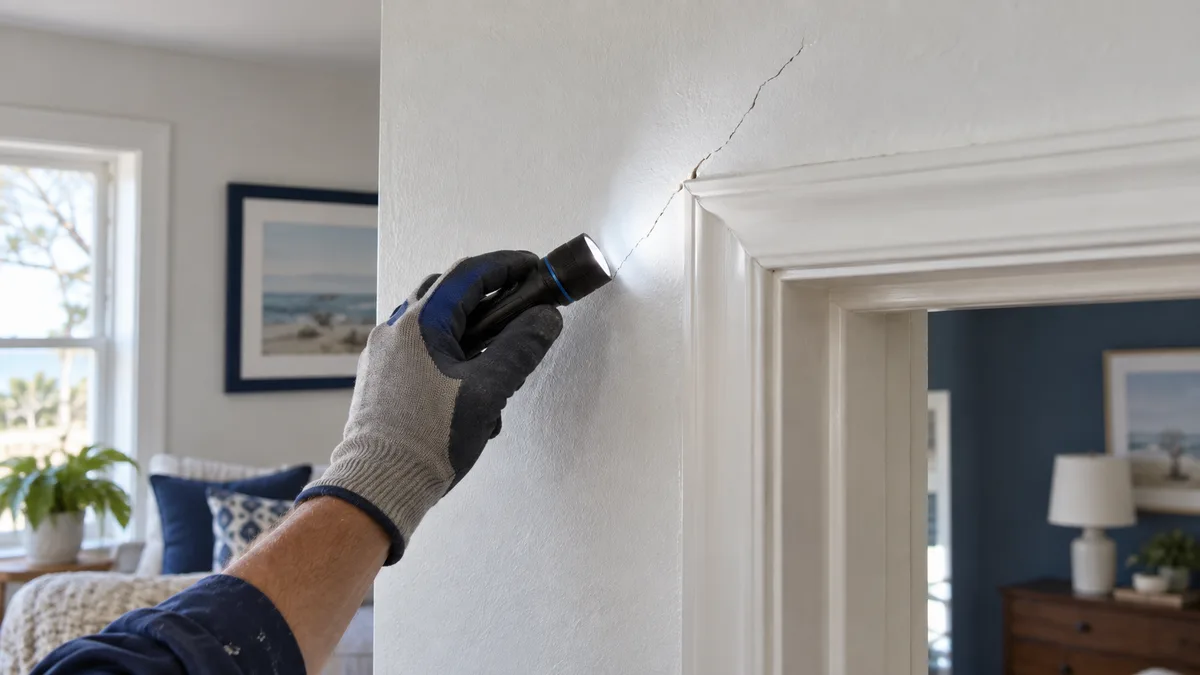
If a crack reappears in the same line after patching, do not start with another coat of paint. First identify whether it follows a taped joint, starts at an opening, or is part of wider movement. Those clues determine whether the finish needs repair or the wall needs a broader assessment.
Read the pattern before patching
| What you see | Possible explanation | Next check |
|---|---|---|
| Straight line along a board seam | Tape or joint movement | Look for loose tape or a raised ridge |
| Short diagonal line from a door or window corner | Stress concentrated at the opening | Check the frame, nearby trim, and whether the opening still operates normally |
| Hairline at a wall-ceiling junction | Seasonal or framing movement | Compare photos over time and look for widening |
| Crack with staining or soft board | Possible moisture damage | Find and correct the water source before finishing |
Why a filled crack may return
Joint compound fills a gap; it does not stop a joint from moving. Tape that has lost its bond can also telegraph through a fresh finish. Temperature and humidity changes during installation and finishing affect gypsum board and joint compound, as USG and the Gypsum Association explain. That does not mean every recurring crack is structural.
A proper repair may require removing loose material, securing the board, re-taping the joint, feathering the finish, and repainting. If movement continues, the cause needs attention before repeating the surface repair.
When the crack needs a broader inspection
These signs call for an in-person evaluation. A handyman can assess the finish and board, but suspected foundation, framing, or active water problems may need a qualified specialist.
- It widens noticeably or new cracks appear nearby.
- A door or window in the same area begins sticking or no longer closes squarely.
- The wall or ceiling bows, separates, feels soft, or shows water staining.
- The crack returns quickly after a properly taped and finished repair.
What to send with a repair request
Take one wide photo showing the room and opening, one close photo with a ruler for scale, and note when you first saw the crack. Keep a second dated photo if it changes. That helps distinguish a small finish repair from an issue that needs investigation.
For the broader keep-or-replace decision, use our drywall repair or replacement guide.
If the source is understood and the board can be repaired, see our drywall repair service on Long Island for patching and finish blending.
Common questions
Can I paint over a hairline drywall crack?
You can paint a stable cosmetic hairline, but paint alone will not repair a loose taped joint or stop ongoing movement. Track a returning crack and address its cause before refinishing.
Does a diagonal crack mean a foundation problem?
Not by itself. Openings concentrate stress, and finish joints can crack there. Widening, multiple new cracks, or doors and windows shifting out of square warrant a broader inspection.
Why does a crack show up more in winter?
Changes in temperature and humidity can affect framing, gypsum panels, and joint compound. A seasonal pattern is useful evidence, but an on-site look is needed to identify the actual cause.