
Home Repairs
Repair or Replace Damaged Baseboards and Door Trim?
By Ivan ·
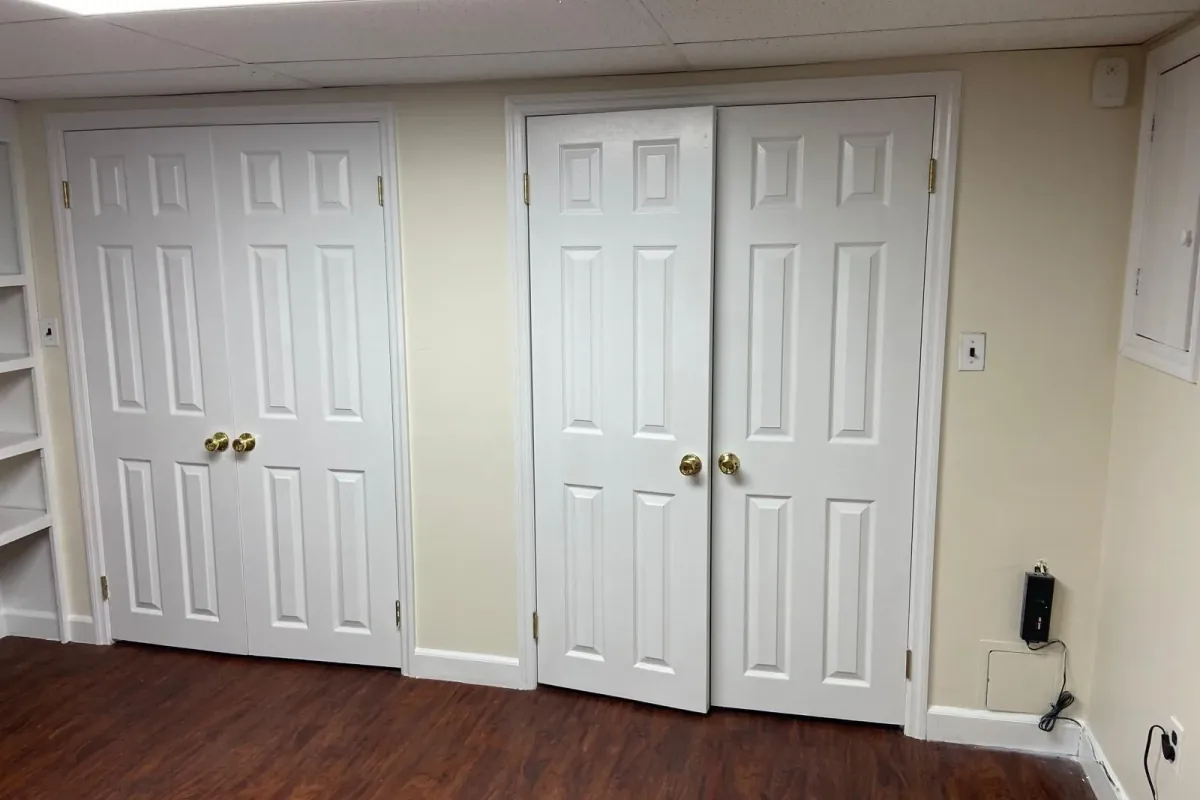
A dent in a sound baseboard is a different job from a swollen section beside a leaking fixture. Repair can make sense when the material remains stable and the defect is local. Replacement becomes more useful when the damaged section cannot provide a dependable base for a clean finish.
Start by photographing the full run and the defect. For door casing, include the door and both corners above it. Those wider views help show whether the issue belongs to the trim, the wall, the door operation or a combination.
Match the repair to the condition
| Condition | Possible approach | Decision point |
|---|---|---|
| Small dent or nail hole | Local preparation, filling and refinishing | Is the surrounding material sound and stable? |
| Damaged outside corner | Rebuild a small defect or replace a section | How much shape and sound material remain? |
| Split or loose section | Assess fixings, joints and material condition | Can it be secured and finished reliably? |
| Swelling, softness or water staining | Investigate moisture and assess replacement | Has the cause been resolved and nearby damage checked? |
| An old profile with no standard match | Source a match or plan a coordinated replacement | Which visible junctions will the new profile meet? |
Identify what the trim is made from
Painted trim may be solid wood, finger-jointed material, MDF or another product. Its construction influences what can be repaired and how a replacement should be prepared. A coating can conceal the original material, so avoid choosing a method only from its color.
For stained or clear-finished wood, a repaired area may remain more visible than it would under paint. Agree on the appearance goal before work starts. A stable repair and an exact grain or color match are separate expectations.
Check the cause before closing a gap
A gap at a trim joint may reflect a fitting detail, material movement or movement in an adjoining assembly. Persistent change, staining or soft material deserves assessment before the gap is filled again.
If moisture is present, identify its source and examine the affected wall or floor as needed. Replacing one visible board while leaving continuing wetting in place does not establish a lasting repair. Avoid using a cosmetic trim job to conceal a wider defect.
A close profile match needs several measurements
Record the trim’s width, thickness and shape, then look at how it meets corners, adjacent runs and flooring. A similar-looking board may project differently or leave an awkward step at a retained section. Bring a usable sample or clear cross-section photograph when seeking a match.
If a matching profile is unavailable, replacing a complete visible run or coordinated opening may be more satisfactory than joining different shapes mid-wall. Ask to compare those options before the material is ordered.
Include the adjoining work
Removal can expose old fixing points, damaged paint edges or an uneven wall behind the trim. The scope should identify wall preparation, joint treatment, primer and finish coats where required. Clarify whether just the replacement or the entire visible run will be coated.
For a painted room, use the touch-up versus repainting guide to decide realistic finish boundaries.
Before disturbing old paint, ask about lead-safe planning for covered work in pre-1978 housing. Do not begin sanding or demolition simply to obtain a material sample when the coating has not been assessed.
Separate door operation from the casing finish
If the door also sticks or fails to latch, start with the door repair-versus-replacement guide.
A new casing does not by itself correct hinges, a damaged jamb or an operational problem. List those symptoms separately so the assessment covers both appearance and function.
For baseboards, casing and matched sections, see our carpentry repair service. Send the full run, close-up damage, material details if known and the finish you want to retain.
Common questions
Can a short damaged section be replaced?
Often, when a suitable match and sound joining points are available. The visible result depends on the profile, joint locations, material and finish; compare a section repair with replacing the whole visible run.
Can swollen trim simply be painted again?
First assess the material and moisture source. Paint does not restore a swollen or deteriorated profile, and continuing wetting needs to be resolved before a finish repair.
Do I need to replace trim throughout the house to match one room?
Not necessarily. An individual run, opening or room may provide a sensible boundary. Look at the connections to retained areas before choosing how far replacement should extend.
Will caulk fix every gap around a door?
No. The appropriate treatment depends on the joint, material condition and cause of the gap. A loose or moving assembly should be assessed rather than hidden under repeated filler.