
Home Repairs
Drafty Front Door: Repair the Seal or Replace the Door?
By Ivan ·
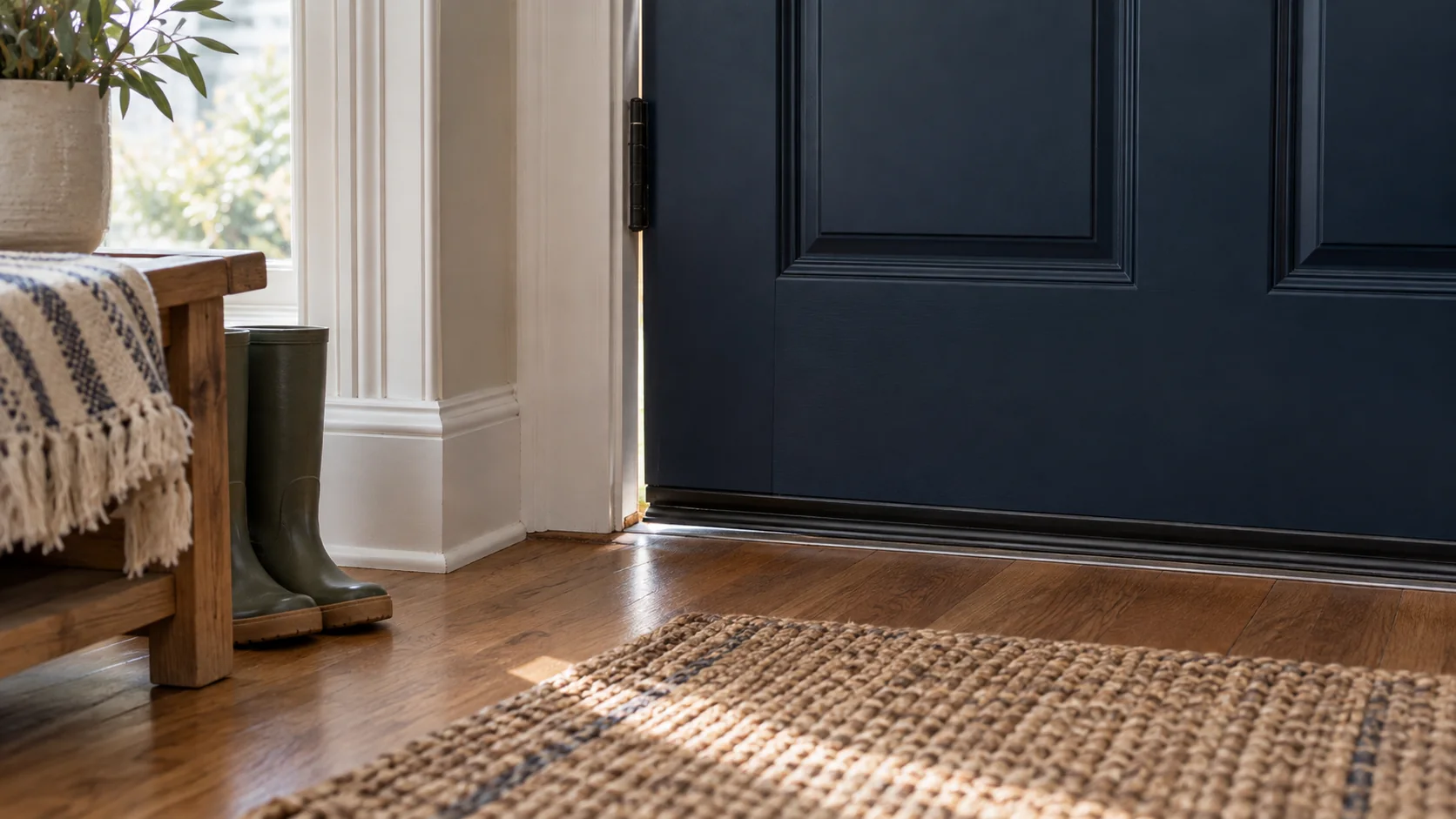
Feeling cold air at the front door does not tell you which part has failed. The door may be sound while a flattened seal, torn sweep, or poorly adjusted threshold lets air through. A gap around the stationary frame is a different repair. Trace the path first; then decide whether to repair the seal or replace more of the opening.
Find the leak path
On a windy day, inspect the closed door from inside. Look for daylight and feel along the top, sides, bottom, and the trim around the jamb. Check whether the latch pulls the slab evenly against its seal. Do not use a flame near curtains or finishes to hunt for drafts.
| Where you feel air | Likely area | Typical response |
|---|---|---|
| Along the moving edge | Compressed or torn weatherstripping; poor fit | Replace seal and adjust door |
| At the floor under the slab | Sweep or threshold | Repair/adjust bottom seal |
| Behind interior trim | Gap around the installed frame | Inspect and air-seal stationary joint |
| With staining or soft wood | Water entry or rot | Inspect opening before sealing over it |
Weatherstripping, sweep, and threshold do different jobs
Weatherstripping compresses against the door along its moving edges. The sweep and threshold meet at the bottom. Caulk belongs at stationary joints such as trim-to-wall gaps, not across a moving door edge. The U.S. Department of Energy distinguishes caulking for stationary components from weatherstripping for doors and other moving components.
A new seal must make contact without making the door hard to latch. The Department of Energy’s exterior-door job aid calls for both reduced infiltration and proper operation. If the slab is sagging, align it before adding thicker sealing material.
When to consider replacing more than the seal
A door that is visibly warped may never compress a new seal evenly. Soft wood at the bottom of the slab, sill, or jamb suggests moisture damage. Water stains around the opening raise the question of how water is getting behind the unit; a sweep alone will not solve that.
If the slab is sound but the jamb is damaged, the sensible scope may be frame repair or a full pre-hung unit rather than simply replacing the slab. Ask the estimator to explain which part has failed and what the proposed work changes.
The broader repair-versus-replacement guide for doors compares these decisions across door types.
What to send for a useful estimate
Photograph the closed door from inside and outside, then the top, bottom, latch side, threshold, and any stained or soft wood. Note when the draft is strongest and whether water also enters. That helps separate a simple seal job from a damaged opening.
Blue Whale can assess the fit and seal through its Long Island door repair and replacement service. The estimate should identify the failed component before recommending a new door.
Common questions
Can I just add thicker weatherstripping?
Only if the door is aligned and still closes and latches easily. Excessively thick material can make operation worse and may hide a fit problem.
What is the difference between a sweep and a threshold?
The sweep attaches to the bottom of the door; the threshold is the surface it meets at the floor. Both must fit correctly to seal the bottom edge.
Does a draft mean the door is inefficient?
A draft means air is leaking somewhere at or around the opening. The cause may be a replaceable seal or a stationary frame gap, so the whole door may not need replacement.
What if water is entering too?
Treat water entry as a wider opening problem until the source is identified. Do not cover staining or soft material with new weatherstripping and assume the issue is solved.