
Home Repairs
Why Does My Door Stick or Refuse to Latch?
By Ivan ·
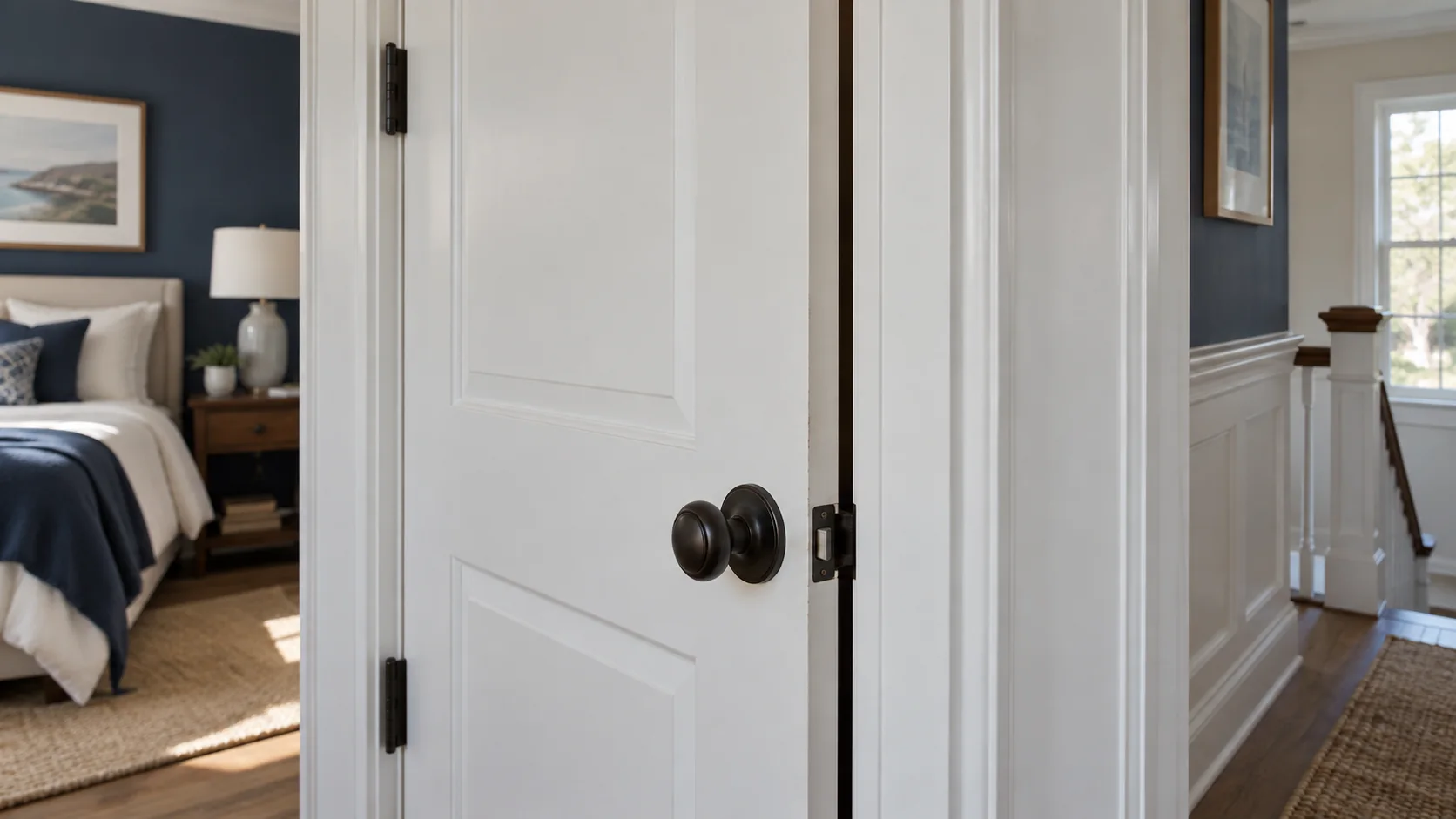
A door that takes a shoulder to close is giving you a clue. Where it rubs, whether the latch lines up, and whether the problem changes with the weather help separate a loose hinge from a swollen slab or shifting frame. The same symptom can have different causes, so trimming the edge is not the first step.
Read the gap around the closed door
Close the door gently without forcing the latch. Look at the reveal—the narrow gap between the slab and jamb—along the top and sides. A tight point shows where the door contacts the frame; an uneven gap can suggest sagging or misalignment.
| Symptom | Possible cause | Next check |
|---|---|---|
| Rubs at upper latch corner | Door sagging on hinge side | Hinge screws and top reveal |
| Latch hits above or below strike | Hinge or frame alignment | Gap at top and latch edge |
| Only sticks in humid weather | Wood swelling or tight original fit | Whether rubbing disappears in drier months |
| Gap changes year after year | Frame or building movement | Cracks and fit around the opening |
Start with hinges and hardware
Loose or stripped hinge screws can let a door sag until the latch no longer meets the strike plate. A repairer checks whether the hinges are secure and the slab sits squarely before moving the strike or removing wood. A damaged latch or loose handle can create a similar “will not close” complaint even when the slab fits.
Do not move the strike plate just to make a sagging door catch if the hinge problem remains. That can produce a temporary fix and a second problem when the door is finally aligned.
When humidity is the culprit
Wood expands as it takes on moisture. A door fitted very tightly in winter may bind during a humid Long Island summer. If the hinges and frame are sound, carefully planing the binding edge and sealing the newly exposed wood may be reasonable. Removing too much can leave a cold-weather gap, so this is a measured repair rather than a quick cut.
If several doors suddenly change fit, cracks appear around the opening, or the same door needs repeated trimming, have the frame and surrounding structure assessed before another adjustment.
What an estimate should cover
Show the repairer the point of contact, the latch behavior, and the gap around the door. Say whether the problem is seasonal or constant. An estimate can then distinguish hinge repair, strike alignment, limited planing, hardware replacement, or work on the jamb. Exterior doors also need their seal and security checked after alignment.
For the broader decision, read when to repair or replace a problem door.
If the hinges, strike, or slab need professional attention, Blue Whale offers door repair on Long Island for interior and exterior doors.
Common questions
Why does my door stick only in summer?
A wood slab can swell as humidity rises. Check hinge and frame alignment too; seasonal sticking is a clue, not proof that the slab alone is the problem.
Can a strike plate be moved?
Yes, when the door is otherwise aligned and the latch position needs correction. If a loose hinge caused the sag, fix that first.
Will planing a door ruin the finish?
Any exposed wood edge must be sealed and finished after planing. The amount removed should be minimal so the door does not develop a visible gap in drier weather.
When should I worry about the frame?
Recurring misalignment, a widening gap, cracks around the opening, or multiple doors changing fit are reasons to assess the jamb and surrounding structure.