
Remodeling
Paint, Reface, or Replace Kitchen Cabinets?
By Ivan ·
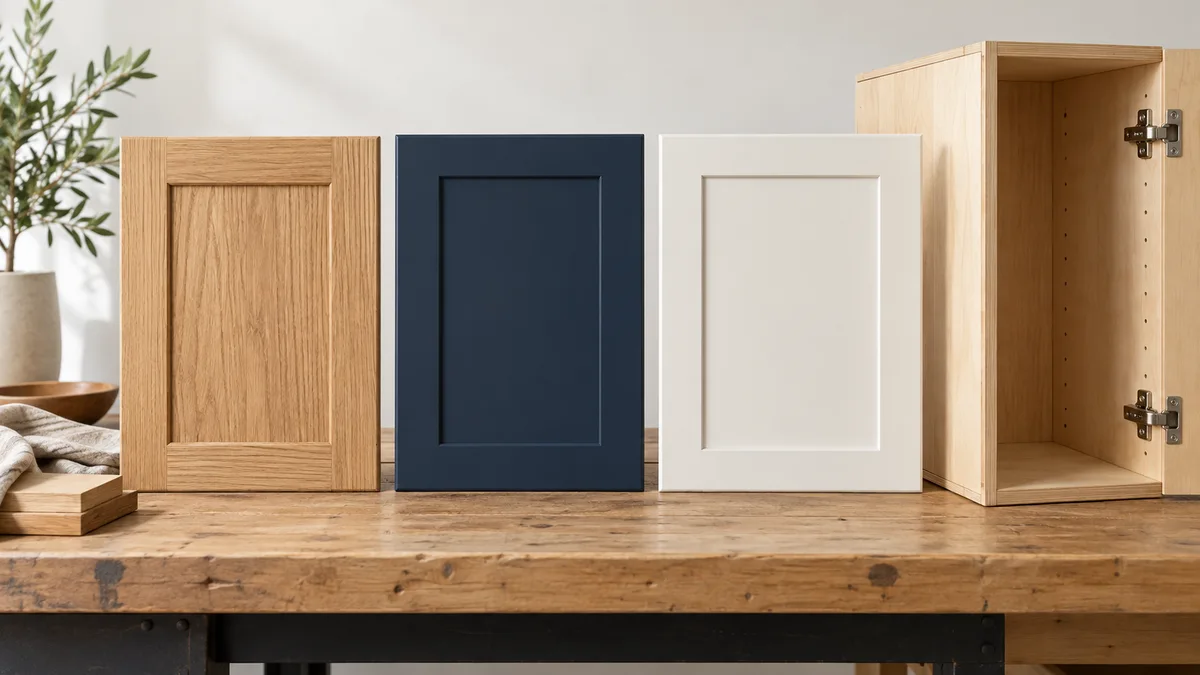
Choose cabinet work by what needs fixing. If you like the door style and storage layout, painting may address the appearance. If the boxes work but the fronts look dated, refacing may provide a different style. When the boxes or arrangement are the problem, changing their surface does not solve it.
Before comparing proposals, separate the cabinet box, face frame, doors, drawer fronts and hardware. A quote that says “new cabinets” or “cabinet refresh” without identifying those components leaves too much open to interpretation.
What each option changes
| Option | Usually retained | Main change | Limitation |
|---|---|---|---|
| Paint | Boxes, doors and drawer fronts | Prepared surfaces receive a new finish | Existing profiles, grain and layout remain |
| Reface | Suitable cabinet boxes and arrangement | New fronts with coordinated exposed surfaces | Does not rebuild failing boxes or change the whole layout |
| Replace | Only components specifically agreed for reuse | New cabinets, potentially a new arrangement | May affect counters, walls, flooring and trade work |
Inspect the boxes before selecting a finish
Look at the sink base first, then drawer supports, cabinet bottoms and wall attachments. Swollen panels, unstable mounting, deteriorated joints or damaged hinge fixing points need an assessment. A loose hinge may be a local repair; widespread material failure is a different decision.
Operate every door and drawer. Check whether the storage is useful, not merely intact. If you need deeper drawers, a different pantry arrangement or a relocated appliance, ask whether those changes fit the retained boxes. Do not assume refacing includes interior rebuilding.
Painting depends on preparation and the existing surface
Cabinet coatings must suit the material and previous finish. Benjamin Moore’s cabinet-painting guidance emphasizes cleaning, appropriate surface preparation and priming; the selected product instructions determine application and curing requirements. A glossy or greasy surface needs more than a quick coat.
Solid wood, veneer, laminate and previously painted cabinets do not all need the same preparation. Peeling coverings, water damage or poorly bonded earlier paint should be assessed before a finish is specified. Ask whether visible grain will remain and whether a sample can show the expected appearance.
Door removal, labeling, hardware handling and a protected work area should be part of the plan. Dry-to-touch is not the same as ready for normal handling. Discuss how long doors and drawers must be treated carefully under the chosen coating system.
Refacing needs a component list
Changing fronts can produce a coordinated appearance while retaining useful cabinetry, but the result depends on the treatment of every visible surface. Compare complete proposals, including edge details and trim, rather than door samples alone.
- Which doors and drawer fronts will be replaced?
- How will face frames, exposed sides, end panels and trim match?
- Are hinges, pulls, drawer slides or interior repairs included?
- Are existing hinge holes and hardware spacing compatible?
- Which damaged components must be repaired or replaced first?
Consider the countertop before committing
If you plan to retain the base cabinets, review the checks for replacing countertops on existing cabinets.
Countertop removal can affect cabinet finishes, and new cabinetry may change support, dimensions or the sink opening. Agree the cabinet scope before countertop fabrication. If replacement is likely in the near future, ask whether spending on painting or refacing now would be repeated later.
For the broader decision, use our kitchen refresh versus full remodel guide.
For painted surfaces in a pre-1978 home, discuss lead-safe preparation before sanding or removal. Consult the EPA guidance for covered renovation work rather than assuming ordinary sanding is appropriate.
Make the assessment specific
Our kitchen remodeling service includes cabinet painting and refacing as part of kitchen updates. Send wide photos, close views of damage and the changes you want to the doors, storage and layout.
Include what you expect to keep. A proposal should explain preparation, included parts, finish selection, hardware, protection and any exclusions. That makes the three options easier to compare on the same basis.
Common questions
Do cabinet interiors need to be painted too?
Not automatically. Sound, clean interiors may remain. Specify whether the proposal covers interiors, shelves and drawer boxes; painting those areas adds preparation and affects when stored items can return.
Can I change cabinet handles without replacing doors?
Often, but the new handle spacing must fit the existing holes or the finish work must address them. Decide the hardware before painting or ordering new fronts.
Will paint hide wood grain?
Not necessarily. Visible grain depends on the wood, preparation and coating system. Ask for a representative sample rather than assuming a factory-smooth appearance.
Can one damaged cabinet be replaced while the rest stay?
Sometimes. Dimensions, finish matching, countertop support and attachment to adjacent units need checking. A local replacement should be planned with any countertop or refacing work.